Mistakes to Avoid When Buying a Suppressor
Buyer’s guide to choosing the right suppressor… without regrets
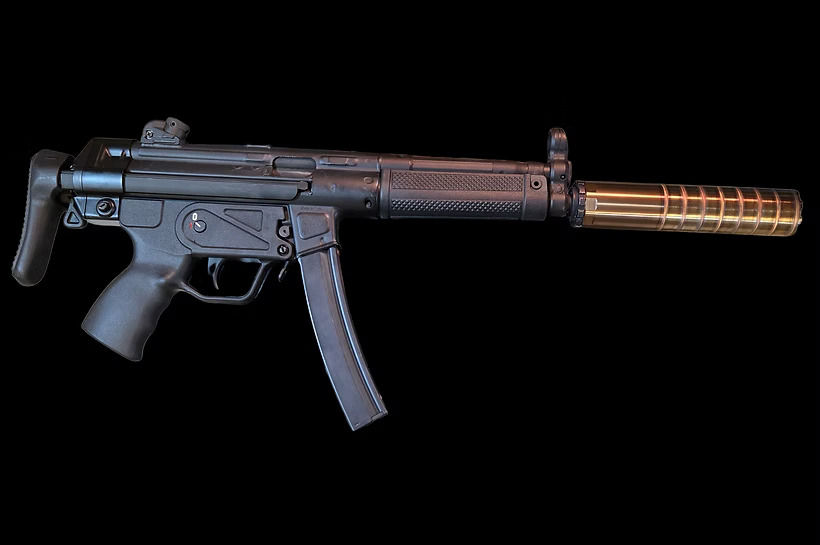
1) Mounting mistakes

The trap: Slapping a can on whatever mount/thread you have.
Why it bites:
Flash hider length & blast baffle interference: Not all Flash Hiders or Muzzle Brakes fit in every can. Many can protrude well into the Blast Chamber and come in contact with the blast baffle, preventing you from even mounting your suppressor.
Direct-thread limitations: Heat cycling & vibration can walk a direct-thread can loose. This can lead to the risk of baffle strikes and POI shift.
Ignoring HUB (1.375×24) ecosystem: This can lock you into a direct thread only or into one company’s mounts - with some companies mounts being very expensive because they know you need their mounting system.
No lock: non-ratcheting mounts can back out under sustained fire.
Do this instead:
Verify muzzle device overall length vs. can’s required internal clearance. Ensure you can has the internal length to fit your intended muzzle device - When in doubt call the suppressor manufacturer, they should be happy to help.
Prefer HUB (“ASR/Plan A/Plan B” class) for near-universal mount options.
Choose ratcheting/locking or secure taper systems to resist loosening during heat cycling.
Torque to spec; utilize a high temp thread locker such as Rocksett™.
How we do it: Hickory Hill Arms cans are HUB‑pattern. We recommend locking or rock‑solid taper mounts and are happy to provide fit guidance for your exact muzzle device.
2) Believing “flow‑through fixes everything”

The trap: Thinking low blowback automatically means better on every host.
Why it bites: Flow‑through designs often route gas at the expense of raw attenuation and tone quality. On many 5.56 setups, they sound sharper to the ear (even when a meter peak looks close) and may give up downrange comfort.
Do this instead: Start with a well‑designed conventional baffle stack and tune the gun (gas + buffer/spring) for back‑pressure. Use flow‑through only when you can’t tune the host or a specific platform demands it.
How we do it: Hickory Hill Arms targets broadband tone control with a conventional stack—built for comfort at the ear and practical suppression on real rifles.
3) Not understanding 3D‑printed vs. conventional builds

The trap: Assuming additive (3D‑printed) cores are always stronger and better.
Why it bites: After a baffle strike, a monolithic printed core is usually not realistically repairable. You’re effectively buying a single, non‑serviceable core. Conventional stacks can be re‑cored—a new stack welded to the serialized body (per ATF rules and manufacturer capability).
Do this instead: If you care about serviceability and upgrade paths, pick a conventional architecture with a maker who supports repairs.
How we do it: Our conventional architecture preserves options for stack replacement so your serial doesn’t become a paperweight if the worst happens.
4) Getting materials wrong
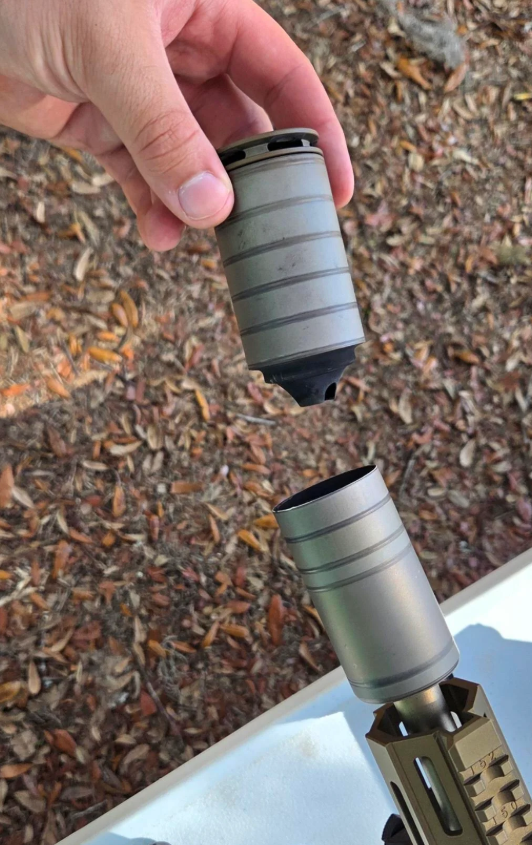
The trap: Choosing materials based on hype, not heat behavior.
Why it bites: Different alloys behave very differently at rifle temps.
· 300‑series stainless: Old standard; fine corrosion resistance but poor high‑temp strength for hard 5.56 use.
· Inconel: Heat beast—but heavy, expensive, usually overkill for civilian firing schedules.
· Titanium: Light, but not as durable at rifle heat temps; can spark; better for low‑temp roles.
· 17‑4 PH: The sweet spot for most users—durable, weldable, heat‑resistant with sane weight/cost.
· Cobalt‑6/Stellite: Super‑alloys—expensive, heavy, unnecessary for most real‑world use.
Do this instead: Match alloy to use‑case. For 5.56 AR duty cycles, 17‑4 PH covers ~99% of needs without the weight/cost penalty.
How we do it: Deadridge and Nightfall cans use 17‑4 PH to balance durability, weight, and price for typical use.
5) Ignoring length & diameter constraints

The trap: Assuming longer = better.
Why it bites: Extra length adds leverage, slows handling, and larger ODs may not nest under your handguard or obscure your iron sights on some pistols/rifles.
Do this instead: Choose the shortest can that achieves your comfort goal. Confirm OD vs. handguard ID and overall length with your muzzle device.
How we do it:
Deadridge - S for maximum suppression/comfort in sensible length (5.75" / 15.8 oz).
Deadridge - K for ultra-compact handling with class‑leading suppression (4.6" / 12 oz).
Nightfall for compact handling when larger calibers are on the menu such as 300 Blackout/9mm/300 Win Mag/etc. (6.2" / 12.1 oz)
6) Not matching weight to barrel length

The trap: Hanging a heavy can on a long barrel.
Why it bites: A 20+" barrel magnifies nose weight and fatigue. Short barrels can “carry” a few extra ounces without killing balance.
Do this instead:
10.5–12.5" 5.56 SBRs: pick Deadridge - S (comfort) or Deadridge - K (agility) by mission.
16–18" 5.56 patrol: generally Deadridge - S, unless fast handling dominates then pick Deadridge - K.
20" or longer 5.56 precision: keep can weight moderate or use Deadridge - K if balance > max suppression.
30 Cal/9mm/etc.: Pick Nightfall for fast handling suppression across the board.
Keep in mind that longer barrels are easier to suppress as the pressure at the muzzle will be lower than on a shorter barrel (11.5" barreled 5.56 rifles can have as much as 11,500 PSI at the muzzle!)
How we do it: We publish true lengths/weights so you can predict balance changes before you buy.
7) Treating the rifle & can as separate (gas/dwell)

The trap: Bolting on a can without optimizing the tuning.
Why it bites: All suppressors raise back‑pressure → higher bolt speed, gas‑to‑face, inconsistent ejection. You’re leaving performance on the table if you aren't treating the rifle and suppressor combo as a system.
Do this instead: Add an adjustable gas block and tune buffer/spring until ejection is consistent and the gun feels smooth.
How we do it: We’ll spec gas/buffer tweaks so your host and can work together as a system and ensure you get the most out of your suppressor and rifle package.
8) Not weighing benefits vs. cons (and fixes)

The trap: Expecting only upsides.
Why it bites: Every can adds some weight, length, heat, and gas.
Do this instead:
Gas‑to‑face → tune gas and buffer systems, consider a vented charging handle or a piston system if direct impingement.
Weight/length → pick Deadridge - K when agility matters most and Deadridge – S or Nightfall (6mm or larger) when you need the best suppression possible and can tolerate the extra inch and ounces.
Heat → respect firing schedules; allow cool‑downs. Using a high quality lubricant on your firearm's wear components will go a long way to ensuring your rifle remains reliable (we recommend SLIP 2000 - E.W.L.)
How we do it: We help you tune hosts and pick Deadridge - S vs. Deadridge – K for your use so you keep the pros and reduce the cons.
9) Overlooking where K wins

The trap: Assuming compact = loud and pointless.
Why it bites: When handling is king (vehicles, woods, CQB, long sling days), a well‑designed K beats a longer, heavier can that slows you down.
Do this instead: Choose Deadridge – K when weight/length penalties matter more than absolute suppression. Use Deadridge - S when comfort is the priority.
How we do it: Our Deadridge - K is engineered to be the quietest in its class for its size at just 4.6" / ~12 oz, keeping agility high without trashing tone.
10) Skipping repair/upgrade paths

The trap: Treating a can like a disposable appliance.
Why it bites: You’re married to the serial and the used market is thin. If it can’t be repaired or upgraded, you’re stuck with it.
Do this instead: Pick a design/vendor with service pathways (e.g., stack replacement) to protect your investment as tech evolves or should you even need a repair.
How we do it: Our conventional architecture supports future service/upgrade options (within regulations) so your purchase always stays viable.
11) Chasing peak dB over tone

The trap: Believing two equal peak dB numbers sound the same.
Why it bites: The ear cares about the spectrum, not just the spike. A “siren‑like” high‑frequency signature is harsher than a “bassy” one at the same peak dB number.
Do this instead: Favor cans tuned for broadband comfort. Listen to real clips; don’t rely on a single number.
How we do it: We design for a smoother spectral profile—heard and felt at the ear and downrange. This has allowed us to produce one of the most comfortable sounding suppressors on the market that absolutely dominates in its class.
12) The one‑size‑fits‑all mistake

The trap: Buying one big .30 can to do everything.
Why it bites: On short 5.56, that often means extra length/weight, oversized bore (worse suppression), and harder blast on the first baffle. Most 30 caliber suppressors are not designed for the harsh environment of a short barreled 5.56 and you end up with a "do-all" that "does-nothing" well.
Do this instead: For heavy 5.56 use, pick a dedicated 5.56 can that matches your real mission. You’ll end up there anyway—skip the regret.
How we do it: Deadridge S/K are purpose‑built for 5.56 hosts so you don’t pay magnum penalties on a fast-handling carbine. For 30 caliber use we recommend our Nightfall suppressor.
13) Paper forms & kiosk traps

The trap: Using paper or kiosk systems that keep your EFT (Electronic Finger Print Files.
Why it bites: Paper is slow, and some kiosks won’t give you your fingerprint file, locking you into their dealer network.
Do this instead: Use ATF e‑Forms and, if possible, get EFT you own (so you can choose any dealer). Your dealer can typically take the necessary photos during the paperwork filing phase of your purchase.
How we do it: We guide e‑Form submission and help you secure/retain your EFT so you keep dealer freedom.
14) Buying hype instead of data

The trap: Picking on marketing alone.
Why it bites: Without standardized testing you’re comparing apples to oranges. A‑weighted numbers can under‑report by ~6–7 dB for impulse noise. This is an industry "Trick" that has been used for decades and is just now being shown for what it is thanks to independent research organizations.
Do this instead: Look for data collected to MIL‑STD‑1474D methodology with context (host, ammo, mic positions) using linear weighting to capture the true impulse noise of a gunshot - this is where hearing damage happens so this needs to be where progress is made. Compare like‑to‑like.
How we do it: We publish test context and use consistent setups to MIL‑STD‑1474D so you know what the numbers actually mean.
15) “Full‑auto rated” without a definition

The trap: Taking “Full Auto‑rated” at face value.
Why it bites: There’s no industry standard. Claims without a schedule (barrel length, round count, cooling) don’t mean much. Does it mean 1x magazine of 3-5 round bursts, 1x 30 round mag dump, a 200 round belt on a 249 SAW? What use case actually fits your needs...
Do this instead: Ask for the protocol behind the rating. Find what the manufacturer is actually testing and determine if that fits your needs
How we do it: Our rating references SOCOM‑style schedules on defined hosts. We’ll show you what “full‑auto rated” means in our language so you can judge if it is fit for your use. When we say "Go ahead, Beat the hell out of it" we mean it!
Still Confused?
Still not sure? Give us a shout here and we’ll walk through everything with you and spec it for your rifle, gas, barrel, and use.


Comments